“Justice? What is justice? It’s a mere word. It’s an abstract word with no universal meaning. To different classes of people, justice means different things”,
I felt that.
Ananya’s post had a question, ” why is hate an easy emotion?”. It’s because of the fear of the unknown and the desire for a scapegoat to funnel their negative energy.
#qotd : Have you ever noticed that it’s always easier for people to hate a community rather than hating an individual? Do you know why?
China’s cultural revolution was anything but cultural. Anyone not praising the Communist Party or the leader Mao Tse-tung (who was trying to purge political rivals and reassert his authority) was considered to be “uncultured”. To ensure his position, Mao appointed a special committee to conduct the Cultural Revolution in the name of ” The Great Leap”.
Chinese Cultural Revolution
This committee called the Gang of Four was led by Mao’s wife and 3 other women who were barbarously ambitious and controlled the entire revolution abducting people, forcing them to confess for something they didn’t commit, persecuting them in the name of “Enemy of the state” and killing them in the hands of their so-called revolutionaries. She had the army of Red Guards who were mostly teens with rushing hormones with no knowledge about anything and would even kill their families if aggravated. The mission of the Red Guards was to rid the country of the “Four Olds”: old culture, old customs, old habits, and old ways of thinking. Mao’s “The Great leap forward” that was supposed to be economically revolutionary resulted in The Great Chinese Famine killing thousands of people.
Mao’S Wife
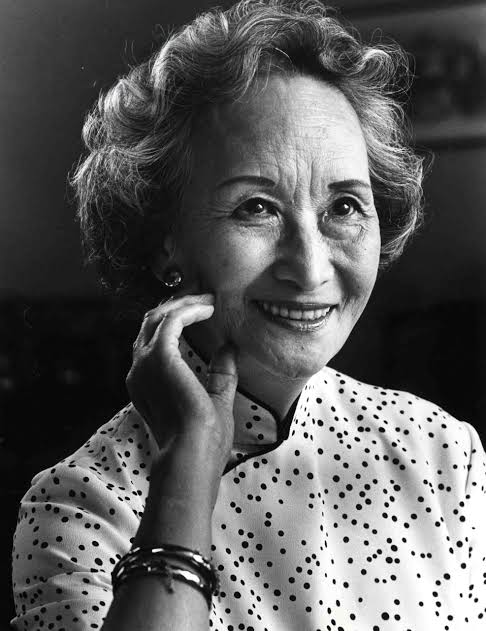
Nien Cheng was the wealthy widow of Kang-chi Cheng who worked for Kuomintang. She was Western-educated, “Read Books by foreign authors” and herself worked in Shell oil. Red guards ransacked her home, arrested her on suspicion, and kept her in solitary confinement for 6.5 years. In these years, she was brutally tortured, kept in a cell too small to even lie down, handcuffed so tightly that she feared losing her hands, and even forced to confess being a foreign spy (just as they did to hundreds of other citizens, but they confessed and Cheng didn’t). She conquered every allegation thrown at her. She even used Mao’s teachings successfully against her interrogators, frequently turning the tide of the struggle sessions against the interrogators. During her term, Cheng lost her teeth, caught pneumonia, and had hemorrhages yet she defused the misery by laughing at her accusers. After her years in custody, she was told on March 27, 1973, that she was being released because of an “improvement in her way of thinking and an attitude of repentance.” She refused to accept that statement and vowed to remain in detention until prison officials officially declared her innocent and published an apology in Shanghai and Beijing. Yes, she single-handedly defeated Mao’s army.
Nien Cheng
I am not going to describe the life of Cheng after her release or what made her move to another country. That’s for you to find out. And this book is not just an autobiography, it’s the history in itself.
भिडे आसमंती ध्वजा वैष्णवांची उभी पंढरी आज नादावली तुझे नाव ओठी, तुझे रूप ध्यानी जिवाला तुझी आस गा लागली जरी बाप साऱ्या जगाचा परि तू आम्हा लेकरांची विठू माऊली
If you have ever grooved to this song, “Mauli” by the famous Ajay-Atul Gogavale duo, you must have wondered what’s “Mauli”(if you are not someone who understands Marathi). And if you have not, I insist you listen to that song.
A charming dark-skinned youth in his extreme essence standing on a brick with his hands in akimbo position and winning hearts with his smile. Vithoba, Vitthal, or Panduranga residing at Pandharpura was originally a God for farmers, who gradually rose via being God of poet-saints to being one of the Supreme Lords. I tried to comprehend the concept. It’s the same overwhelming sentiment we Odias have for our Jagakalia (Lord Jagannath) where we consider him to be a family member with whom we can share our emotions. Now we must know why these cult Gods are considered as our own people and why a male God, Vitthal, is summoned as Mother. Yes, the Varkaris(devotees of Vitthala) fondly address him as Vithoba Mauli (Mother Vithoba).
We, humans, are extremely emotional beings. We feel happy when with our loved ones; sad if we lose someone near to us; guilty if we hurt someone; and angry if things do not happen as we had planned. Hence there is never a moment when we do not emote. And these emotions are highly influenced by the thousand years of cultural devotion and the idea of ” becoming the seeker to the finder”.
The Indian view of life moves from an infra-rational existence to a more rational existence, and further, towards a yet greater supra-rational existence and end-state of Truth, Bliss, Peace, and Beatitude. We seek divinity in our leader, to assist in this journey, who must have walked the same path and is ahead of us. These cult Gods have stories of the same sufferings and overcoming them and accepting everyone into their circumference without any discrimination. The whole idea revolves around the journey from darkness to light or finding shelter and peace of mind. And we make the idea of a safe shelter according to what we have perceived from our lofts. For some, this secure base can be the lover. For some, it’s a brother, and for some, it is the mother. Magically, this idea of bhakti heals our mental state and helps us calm down our anxieties. In those idols, with stories attached to them by our ancestors, we see the perfect person we need in our life who is capable enough to solve all our issues and understand us. This idea is inscribed so deep in us that even in our conscious state we reciprocate it(though knowing that it’s not possible). Consciousness is contagious, and psychic consciousness is more so. And it has been passed down for generations.
Book lovers can understand this as we tend to get attached to a character from the book who can never appear before us. But for us, he/she is the one who can understand our mental state. This is what has been cleverly done with idol worship. You need a point to concentrate your emotions without going nuts. And it actually healed people and made them find their own ways to tackle their issues without boosting their ego.
The roots of everything weren’t that bad after all. It’s people among us who utilized them against their own people.
What’s common between Greek and Hindu myths? Zeus and Indra, Icarus and Sampati, Hermes and Narada, Trojan War and Ramayan, even the concept of gay, transgender, or impotent Gods. And the difference? We got Gods and became blind, they got Gods and opened their eyes. We don’t even question their actions and they never saw them as just and merciful and dared to challenge their authority. Gods can be really weird with their own logic that doesn’t apply to us nor would they want to(if present). And Stephen Fry perfectly understands this brutal queerness of Greek Gods like the birth of Aphrodite( I wouldn’t get into the ball cutting part as that can be a spoiler).
Read this book as a part of #folkloredecember with @whatsshwereading and I wish I would have heard the audiobook first as reading the book and listening to Stephen Fry are two different experiences. I heard it yesterday after Swetha’s reco. So I will talk about the good and bad aspects of the reading part.
The title tag, “Greek Myths retold”, can be misleading. It’s not retelling, it’s what we already know and have been among us for quite some time. He talks about a small group of Gods that doesn’t include the bigger ones just like talking about Mahabharata and excluding Bharata and Shantanu. (But I understand that I have to read the next book.) If you are someone new to Greek mythology, you need to gather your knowledge before hopping on to Fry’s space. Relying on it for everything is like relying on modern retellings of Mahabharata for actual incidental information. It’s hard to impress with a retelling to someone who has gone through the actual scripts. At times I found the writing chaotic and started missing the ” who’s who” with so many elements romping all around the book. I started losing the track of it and had to go back and forth.
But would I recommend it? Yes! Read it for Fry, his wit, his wicked humor & his absolute love for this subject. Fry was unusually delicate about Gay Gods and his pleasing way of characterizing things kept me hooked up.
Fry absolutely has a grip over his love for language. He shows us how these myths gave us our modern-day expressions and how strong an impact they have on us. As you go deeper you realize that his goal was not to interpret or clarify things rather only to tell them, breathing new life into these well-known characters and making stories outright funny.
He has added notes littered all around for you to catch them. These are the soul of the book.
I loved Fry’s vibrant aura and would love to dig into more of his works before coming to any conclusions about my relationship with him. I recommend hearing the audiobook first for Fry made it irresistible.
Watch out, Mr. Neil Gaiman! I may fall for Mr.Fry
And Mr. Stephen Fry, you and I have one more date!
“You are beautiful the way you are. Gifted. Complete. You do not need anyone to tell you your worth. You need not pay attention to your friends. They are technically not your friends if they do not appreciate you. They are just using you to their benefit because you are extremely sensitive and benevolent. You will not be happy unless you get rid of them. You are just confusing yourself around them. A perfect relationship is a myth. It’s all in your head.”
I just convinced someone that he/she is worthless without actually uttering any such words. I am a “Gaslighter”.
I am charismatic, mysterious & hard to read. I get under your skin like a crawling creature, get stuck to your pulses, and control your every emotion, my way. I abuse people to the limit where they question their sanity and the trauma they experience is severe. But you know what, they can’t blame me for they know not what just they went through. And by the time they realize it, they might have no spine to fight them. I resemble a “Bostrichidae” who turns a beautiful piece of art into powder. Where do I reside? In your minds and souls, even when I am no more I continue to live with you, within you.
I trivialize you, brush off your concerns, divert your mind, discredit you for your attainments and make you believe that you are making up everything and all these facades never really happened.
Then how can you identify me? I am omnipresent. I am in your movies, in your books, within your family, among your friends, and within you. Every time you become vulnerable and question yourself, you fuel me up and I rise. I am invincible.
Can you identify me in your popular reads?
🤡 “Grown” by Tiffany A Jackson- I am your Korey to your Enchanted.
🤡”Before I Go To Sleep” by SJ Watson: I am Ben to your Christine.
🤡”A Splendid Ruin” by Megan Chance: Trust me I am more May Kimble than her cousin.
🤡”The Girl on the Train” by Paula Hawkins: I am Tom to your Rachael.
🤡”Gone Girl” by Gillian Flynn: I am Amy to everyone who reads me.
#qotd : Ahh! Do you really think you can fight me? Show me how!
When you are all set to dive into the shaded pool of Halloween, what else can spook you up to other than an all armed, handsomely dressed man holding his head in his hands? Whoooo!
Watched the Johnny Depp starring movie fortuitously long back and almost forgot about it. And then we decided to have a spooky Halloween themed readathon for our club, The Biblioraptor BookClub. The first book that came to my mind was “The legend of sleepy hollow”. The movie was something and wanted to read the book since then. But the crazy-lazy soul in me kept on hindering everything and eventually, it slipped into the junkyard section of my mind.
I pulled it out, wiped it clean and began skimming it last week. To make my experience more breathtaking, I decided to watch the movie again along with the famous Disney two-part animated movie. Trust me, the experience was unprecedented. So here’s what I went through the entire week.
“The Legend of Sleepy Hollow” by Washington Irving
“…ducks and geese are foolish things and must be looked after, but girls can take care of themselves.”
Written in the time when women were seen as mere arm candies, this line was the “Awww” moment for me. But, But, But, Ichabod Crane is a douche canoe. Don’t fall for the movies and series version, Irving’s Ichabod is a lanky, irritating and pant-pooping filthy teacher who wants to marry Katrina Van Tassel(who is also one of his music students) because she is rich, beautiful and has large… tracts of lands. That’s the horrible man!
Ichabod, being from Connecticut which could only generate school teachers then, was someone who couldn’t rely on his looks to woo the women of Sleepy Hollow. So, he used his knowledge to show his superior tastes to most people from Sleepy Hollow. For someone who makes almost no money from his classes, his perpetual poverty makes him drool over the fruits from Mr.Van Tassel’s land and the only way to rise above his own standards is to marry Katrina.
Brom Bones is our regular evil bully whose only interest lies in scaring off Katrina’s suitors. But shaking Ichabod’s position was hard, hence he turned into his best skill to humiliate Ichabod – Pranks.
Ichabod from the book is someone who would believe the strangest of the tales that goes around for he has read a lot of them. He is, in other words, completely naïve and suggestible. The local tale of the Galloping Hessian who rides headless through the woods of Sleepy Hollow particularly alarms him. For those who couldn’t read further, the real excitement starts after the headless horseman arrives. The classic description, the logical reasoning of the horseman and the enduring mystery made the story quite fascinating. Ichabod being followed by the headless horseman in the eerie night tries to rush as fast as he can on his horse chased by the headless man. Being not a skilled rider, Ichabod gets dodged by something near the church. And the very next day the horse Crane was riding returns back to his farm owner and the village never heard of Ichabod Crane ever again.
Disney’s The Adventures of Ichabod and Mr Toad : (1949)
♪ When the ghosts have a midnight jamboree ♪♪ They break it up with fiendish glee ♪♪ Ghosts are bad, but the one that’s cursed ♪♪ Is the Headless Horseman; he’s the worst! ♪
It’s actually a two-segmented movie where the first part is the story of Mr Toad from “The winds in the willows” by Kenneth Grahame and the second part is about Ichabod Crane from “The legend of sleepy hollows” by Irving. And I have to agree that Walt Disney gave the perfect look to Ichabod Crane. The total ambience of the movie was quite similar to that of the Scooby-Doo series. Funny character stretches that face the evil ones. Those accurate expressions. The dialogues. Oh my God! Those were days when watching cartoons was an experience of another level.
(Haven’t read “The winds in the willows” to comment on the first part. )
And Now to my favourite part.
Sleepy Hollow (The Movie): 1999
“When Tim Burton asks you to do a film, do it” – Johnny Depp
The brilliant Gothic colour that takes you to another world, the entire team so much into their characters, the precise dialogues and stunning references throughout the movie. If you didn’t like the movie, I suggest you watch it again and focus on minor details.
Initially, I thought it to be a satirical movie. When I rewatched it after reading the book, I realized that they both were so different. Ichabod from the book was a jerk, but Ichabod of the movie was, umm! – A doormat. Yet he tries to step into the sludge for something he desires. He has his own justifications for being the way he is.
It shows fragments of memories of Ichabod showing his mother from young Ichabod’s perspective. When his mother is on screen, everything is in bright colours, soft, filled with compassion. But when he glimpses his father, the screen transitions into dark ambience with intense and alarming music to show the brutal side of him. The brilliant part is the absence of dialogues in the dreaming parts that allows you to focus on the environment. He contradicts his father with the headless man when he sees his father exit.
And for the parts where Ichabod isn’t dreaming, Tim Burton and Emmanuel Lubezki created a place with such distinctive features that doesn’t feel like a real place, rather something happening in someone’s imagination. The Sleepy Hollow is a grim place, the houses stooping together for support, the shutters slammed against visitors. There is never a sunny day here. The faces of the village fathers are perpetually settled into displeasure.
This may fascinate you that the movie resembles a lot to the Hammer movies with its colour distinctions, the settings, the creepy gooey bodies and the character parities. Everything looks so fake, yet you believe them. And all that was intentional, trust me.
Ichabod crane believes all to be superstition and starts his investigations with his set of bizarre instruments. The rough rides between the headless horseman and Ichabod take a traditional path towards the end to match the generic effects of the previous adaptations. The horseman has its own way of delivering justice to those who deserve it, hence, has a particular choice of people to be punished which kind of feel logical.
This movie isn’t the story what Washington Irving gave us. This is exactly the retelling we needed. I am not so instilled by Irving’s book now. I need an edition with this story in it. There are a lot more in this than I have jotted down. And you need to watch it.
Tell me I have convinced you to watch it. Else I have to write another article for it. But before that, I suggest you read the book. It’s a short one and you can finish it in a day or two. I am adding the link to buy the book and the movie is on Netflix.
Home To 9 UNESCO World Heritage Sites and the most number of Ayurvedic schools in the world, the south Deccan realm has furthermore given us some of the world’s most exotic literary adventures. From Manimekalai by Chitalai Chathanar to Thirukural by Thiruvalluvar or Andhra Maha Bharatamu by Tikkana, Eranna, and Nannaya, their literary traditions go back to the time of initial human civilization boom almost 2000 years ago.
These wonders were passed on to emerging generations by the majesties of different cultures who took the charge to inscribe them into different forms. Some adapted them into their traditional observances and others added them to their scholastic curriculums. Nevertheless, our tribal or royal lineages of different sections bore the burden of not letting the history lose its certainty in a completely new world for as long as possible.
However, since the arrival of new political and structural changes, the lineages themselves started falling off and the fear of losing our identity stood in front of us as a shattered mirage to haunt us for eternity. And then miraculously came forward our new age Indian authors to document as much sap they could extract as possible from the roots of their ancestries.
And I take this opportunity to list some of my personal favorites from each section of South India which we call today the states and territories. These are not just historical pieces, they are journeys down the memory lanes of some of the most unique historical events inscribed by our prominent authors in their magnificent artworks.
Here is the list of volumes and their creators each according to their origins. Happy reading:
• Elegant and Belletristic, Kerala :
“The Ivory Throne: Chronicles of the House of Travancore by Manu S. Pillai”
Think of the “History” period in your classroom, the classes about old and modern world history. Boring, right? Now imagine how your classes would have been if your teacher would have told you about the badass women who tie up their hair into a bun to fight their battles and then come back home to do their manicures. Amusing?
So was our book on the last ruling queen of Travancore, Sethu Lakshmi Bayi. Perhaps a rare book on such a brilliant historical subject written in a way that felt like a completely fictional story. At least one history book where some megalomaniacs dudes aren’t fighting a nugatory battle for some insane boundary crossover. An absolutely witty yet insightful read for history haters. This book is exceptional. Try it.
• Ritualistically elegant Tamil Nadu:
“The Prince Who Became a Monk & Other Stories from Tamil Literature By M. L. Thangappa”
The author of one of the five great epics of Sangam literature, the most cherished, Silapaddhikaram Ilango Adigal was in fact a prince. He was the brother of the most celebrated Chera king of 3rd Century CE, Senguttuvan. Ilango Adigal chose to become a monk and then the history follows. But this particular book talks about 35 different stories along with the one about the prince, beautifully translated by M.L. Thangappa. Each story is extracted from a lost tradition of Tamil culture that dates back to 2000 years old India.
• Magnificient and Alluring Karnataka
Splendours of Royal Mysore Book by Vikram Sampath
Chronological account of 600-year-old Wodeyar dynasty of Mysore. The author has covered the entire history of Mysore in great detail. From the golden era of the Wodeyar dynasty to the rise and fall of Tipu Sultan and Haider Ali. The return of Wodeyars and the complex character of Tipu Sultan. The rule of benevolent British commissioners like Mark Cubbon and Bowring has been described and their contributions have been mentioned. The efforts of Mummadi Krishnaraja Wodeyar to get back his kingdom, how he redeemed himself. Vikram Sampath has left no stones unturned to go deep into the history of Kannadigas.
• Spirituous and Artistic Andhra Pradesh :
The untold Charminar: Writings on Hyderabad by Syeda Imam
Such an eclectic collection of mostly personal articles, memoirs, and analyses on the grand city of Hyderabad. From Narendra Luther’s “Hyderabad through Foreign Eyes” to Sarojini Naidu’s “Letters too tell stories” which tenaciously unfurls the loss she felt after the death of the 6th Nizam. This book has a detailed account of Hyderabad’s most exclusive tales.
• Fierce and Fiesty Telangana :
The Kolams of Adilabad in Telangana: A Sociocultural Milieu By D. Yashwant Rao
A perfect literary contribution to the socio-cultural environ of the rudimentary clans living in the Adilabad district of Telangana. The author has conscientiously carried out the work and brought out the life, living conditions, and cultural styles of the Kolams. Survey, documentation, and presentation are highly comprehending. If you still wonder about the history of newly formed Telangana, this is something you need to add to your reading list.
• Naturesque Prison, Andamans :
The Tale of My Exile By Barindra Kumar Ghosh
Yet again a witty account of a person who was sentenced to death in 1909 in the Alipore Bomb Case later being commuted to life imprisonment in Alipore jail. A humorous description of the hard life of deprivation and humiliation by the prison authorities, written himself by Barindra Kumar Ghosh, the younger brother of Sri Aurobindo Ghosh.
• Nicobar Niches :
Nicobar Islands: in natures kingdom By Tilak Ranjan Bera
I was quite happy to read a book on Nicobarese people that isn’t just a travel blog. A systematic presentation of colonial settlement, historical events, unexplored and unknown Isles, human surveillance, and post-Tsunami managements. A lot has been told about the language, culture, and traditions of the people of Nicobar. If you aren’t really fond of travel guides and seek something more, this is your entity.
• Serene and Sublime Lakshadweep:
The Muslim Tribes of Lakshadweep Islands By Makhan Jha
A short and quick read on the cultural and social structure of the people on the Lakshadweep Islands. The caste structure, hierarchical structure, and history of colonization, all have been included in this anthropological appraisal of island ecology and cultural perceptions.
• De toute beauté Puducherry:
Beyond the Boulevards by Aditi Sriram
A book about pure love for one of India’s most beautiful and culturally diverse territory. The elegant use of metaphors, embroiderical detailing of minute scenes, diverse representation across social classes and cultural groups shows the author’s pure love and dedication for the unique history of Pondicherry. Pick it up to experience the beauty of the city along with the author herself.
These recommendations are just a drop from the entire ocean. There are tons of such marvels that add to the Indian literature and history. Human civilization has been telling its own story through the pens of our beloved authors and only God knows what other wonders we are yet to encounter.
Signing off in the hope to add some more in my next article. Any suggestions are welcomed. Till then you can find the proposed books at