


Introduction:
“Data is a precious thing and will last longer than the systems themselves.”
– Tim Berners-Lee, Inventor of the World Wide Web
Every circadian human activity generates an enormous amount of data into the chain. There has been an exponential growth in data in the last 3 years than in the past 100 years. The universe of data is predicted to grow from a mere 4.5 zettabytes to reach 165 zettabytes by 2030 creating a plethora of hidden potential in this upsurging cloud and it needs to be effectively mined to extract valuable insights.
Data Mining, a term used to sift through the troves of data to unearth useful nuggets of information that enables businesses and the general mankind to make better decisions. Data is futile without being mined and information is futile without being actionable and of business or real-life value. So how do we get from the data to insights to actions and thereby to a more data-driven future?
The prognosis for this ever-expanding data is to come up with not one but a set of powerful tools/toolkit to merge, analyze and visualize a vast amount of structured and unstructured data in a very short amount of time. This requires a powerful set of algorithms that includes AI, Machine Learning, and in some cases, Deep Learning, a strong set of natural language processing engines, and advanced graph computation, all based on distributed in-memory processing and versatile data ingestion capability from pre-built and custom data feeds.
A combination of the above, and with some humans-in-the-loop, data analytics can take a form of an Oracle with predictive and scenario generating capabilities.
Understanding Predictive Analysis :
Predictive analysis is the branch of advanced analytics that makes use of data mining, predictive modeling, machine learning, and artificial intelligence to bring together the management, information technology, and modeling business strategies to make future predictions. Data mining, text analytics, and statistics together allow users to establish predictive intelligence by uncovering patterns and relationships between the pre-existing structured data and newly fed raw and unstructured ones.

Hence, the goal is to identify the historical patterns, analyze the occurrences, and predict the future to assure a systematized environment that’s both consumer-friendly as well as beneficial to the innovators.
History of analytics :
Statistical data presentation and use of the same is not a new concept. Historians indicate that ancient Egyptians used statistical records for building pyramids. This is the same with the south Indian temple architecture or any geometrically designed religious places where analyses were based on the type of deity it is built for along with the cardinal point calculations and bent of human populations.
Analytics, or as we call it today, Data Analytics has been surviving simultaneously with us for quite some time now. The use of this powerful insight tool can be traced back to the 19th century when Frederick Winslow Taylor initiated time machine exercises or when Henry Ford measured the speed of assembly lines. Before the development of computers, US census reports would take seven years to collect, process, and generate the final report. Herman Hollerith in 1890 developed a tabulating machine that would systematically process recorded data. This device helped to complete the report in 18 months. In the late 1960s, analytics began receiving more attention when computers started serving as the major decision-making support systems. Relational Databases invented by Edgar F Codd in the 1970s, became quite popular for they allowed users to write in the Machine-understandable language called SQL by providing the advantage of data analysis on demand. But the dark side to this was the rigidness of RDBs that was not designed for unstructured data. This led to the invention of non-relational databases. By the late 1990s, the enormous flow of divergent information made working with RDBs hectic, and non-relational databases or No-SQL replaced the rigidity of SQL with smoother performance. With the growing vogue of the internet and the development of the google search engine, analytics started gaining more popularity. With the expansion of concepts like Big data, Data warehousing, the advent of the cloud, and a variety of software and hardware, Data analytics underwent a significant evolution.
“There were 5 exabytes of information created between the dawn of civilization through 2003, but that much information is now created every 2 days.”
– By Eric Schmidt, Executive Chairman of Google
Note: The disparate nature of data like images, blobs of text from conversations, chats, videos, and all kinds of multimedia only amplified with the emergence of social media, the democratization of both content consumption and creation.
Predictive analytics, an advanced form of data analytics answers the most crucial question in any mushrooming field, “ what will happen next?”.
The Predictive analytics probability models trigger from historical data, sensor data, and data-in-event evaluating specific consumer behavior and fed or unexpected global information generating a prediction within milliseconds empowering the institution implementing Predictive analytics for a market study aiming at exponential growth.
So what are the advantages now that will add to the use of predictive analysis?
- Upsurging amount of data every second and diversity of data being generated.
- Faster, reasonable, and better-refined computers.
- Easy handling software
- Tougher economic conditions and a need for competitive differentiation
How does Predictive analytics work? :
Predictive analytics has been increasingly used in many institutions as AI-powered analytics, delivers scalable logic and data visualization protocol that facilitates various organizations to design, deploy, manage, and secure reports spawned from various data sources. Here is a step-by-step process of how predictive institutionalized.
Project Definition :
Defining the project upshots, deliverables, spectra, goals, identifying the data sets which are going to be used make the core of this process.
Data acquisition:
Data acquisition, or DAQ as it is often referred to, is the process of digitizing data from the world around us so it can be displayed, analyzed, and stored in a computer. A site example is a process of measuring the temperature in a room as a digital value using a sensor such as a thermocouple. Modern data acquisition systems can include the addition of data analysis and reporting software, network connectivity, and remote control and monitoring options.

Data Mining :
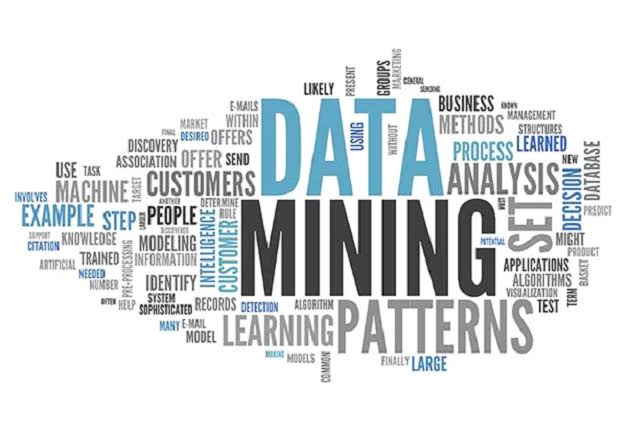
Data mining involves accumulating, scrutinizing, and evaluating large blocks of information from various advents to glean meaningful patterns and trends.
Data Analysis :
Further, the data is analyzed, scoured, transformed, and sported to discover if it provides useful information and helps to infer.

Statistics :
This facilitates to substantiate if the outcomes, inferences, and speculations are admirable enough to go ahead and assess them using a statistical model.
Predictive Modeling:
It procures the ability to automatically build precise predictive prototypes about the future. There are also alternatives to choose the best solution with multi-model evaluation.
Predictive Model Deployment :
This provides the option to deploy the analytic results into the everyday decision-making techniques to get results, dissertations, and output by automating the conclusions based on the modeling.

Model Monitoring :
Models prepared are further tracked to regulate and check for performance congruence to ensure that the desired outcomes are amassed as anticipated.
Busting myths about Predictive analytics:
Predictive analytics are used to discern customer responses or investments, as well as promote cross-sell opportunities. These models help businesses entice, retain and boost their most profitable customers.
But it also requires investment: in your data, in infrastructure and technology, and your time. And organizations’ decisions are too often clouded with misconceptions and myths that need to be busted. Here listed are a few fallacies and their answers.
#1 “To deploy artificial intelligence, we have to invest a lot in exotic new hardware and dedicated infrastructure.”
This myth was true a few years before. But now you can start on the pre-existing infrastructure you already have and surge from there. There’s no need to make vast up-front investments.
Three falling costs make data analytics more accessible in today’s market.
- The cost of data repository –An Infoworld analysis of cloud storage prices found that Amazon AWS, Microsoft, Google, and IBM have lowered their cloud prices and it will keep coming down, thanks to Moore’s Law, H/W is getting cheaper and cheaper and most of the cloud services as pay-as-you-go models – so you don’t have to invest upfront. You do your data analyses and shut down your H/W until you need it again.
- The cost of using data analytics software has come down. You no longer need to buy multiple software packages to achieve your goals. And if done well, could be free of cost with the open-source utilities democratized by big tech companies like Google, Facebook, Twitter, etc.
- The ease of generating and consuming more data than ever before through mobile devices and Internet of Things (IoT) platforms.
Sum it up and you have an abundance of data to implement a well-planned data management technique at a much more reasonable price than ever before.
#2: “Predictive models take too long to build.”
Nope. The dawn of predictive modeling software has made the functions so incredibly efficient that most outcomes can turn out within seconds or minutes.
#3 “We don’t need advanced analytics like machine learning for our business.”
All enterprises need analytics, irrespective of their size. What’s crucial is comprehending the key business issues within your organization and analyzing how advanced analytics can help you unravel them.
#4: “Predictive models are a “black box” and can’t be validated.”
That depends on the type of institution. There are firms and counsels whose predictive models (built for their clients) fall into a “black box,” hampering the translucency of how the model was scored. But it is never the end of the world.
#5 “Data analytics is only for online companies.”
No, it’s not true as most of the frameworks to process, analyze data are based on the open stack – free for any use sans the copyright you can even build one tool yourself using some of these frameworks.
Companies like Domino’s have implemented analytics to focus on creating a trusted data foundation to support their marketing campaigns. It has transformed from a pizza restaurant to a technology company that sells pizza!
#6 “Predictive models replace human judgment.”
As much as we wish this was true, but no predictive models were ever implied to supersede the human judgment or intuition that adds to the process. The majority of the time, predictive modeling aims to enhance and broaden human aptitude in data analysis. After all, it takes a human to decide what datasets to consider and make smarter decisions.
Surpassing these myths, we can now move forward with a peek into the applications of Predictive analytics.
Applications of Predictive analysis :
Customer targeting: Dividing a customer base into groups of individuals similar in specific ways relevant to marketing, such as age, gender, interests, and spending habits enables companies to target tailored marketing messages accurately to customers who are most likely to buy their products.
Churn Prevention: By harnessing the power of big customer data sets, companies can develop predictive models that enable proactive intervention. These companies then interpret the causes of churn and take mandatory actions to retain those customers. For instance, by offering the customer a discount or an extra feature.
Cross-Sell: Application of predictive analytics investigate customers consuming rate, usage, and other aspects, leading to efficient cross sales, or selling additional products to current customers for an organization that offers multiple products.
Risk management: Predictive analytics foresees the best portfolio to maximize return in the capital aid pricing model and probabilistic hazard assessment to yield accurate visions.
Underwriting: Predictive analytics can help underwrite the numbers by anticipating the odds of illness, defaults, and bankruptcy. It can facilitate the technique of customer accession by predicting the future risk behavior of a customer using application-level data.
Financial modeling: This is done by deciphering a set of hypotheses about market behavior or envoys into numerical forecasts. These predictive models are used for benefiting the firms in decision-making procedures about investments or recoveries.
Health Care: The application of predictive analytics in the healthcare sector can infer the patients who are at the risk of developing specific ailments such as diabetes, asthma, and other lifetime illnesses. The clinical decision support systems integrate predictive analytics to benefit decision-making making at the point of care.
Fraud detection: Predictive analytics applications can find erroneous credit applications, defrauding trades both done offline and online, identity thefts, false insurance claims, Pandemic prevention, or Voter Swing Prediction (for elections).
Summary and takeaways:
- Predictive analytics and machine learning are often confused with each other but they are different disciplines.
- Predictive analytics extracts information from data sets to uncover alliances, recognize patterns, predict manias, discover coalitions, etc.
- It allows enterprises to foresee the future and make ethical verdicts.
- The applications of predictive analytics in business intelligence can be inexplicable yet play a key role in attaining impressive goals.
- These can be used across many initiatives and are a great way to boost the outcomes and predict future events to act accordingly.
- Methods of predictive analysis applied to customer data can establish a holistic view of the customer.
- Proper application of predictive analytics can lead to more proactive and effective retention strategies.

“Everything is going to be connected to cloud and data… All of this will be mediated by software.”
– By Satya Nadella, Microsoft CEO
Stay Tuned for more..
Edit courtesy: A Shravan Kumar


