


|| @nguyen_p_quemai #TheMountainsSing #bookreview #comingofage #VietnamWar #historicalfiction #familysaga #warfiction #theGreatFamine #theLandReform #booksbypoc #readingasiapacific #stopasianhate
TW: War, Lynch, Massacre, Post-War PTSD.
The Vietnam war isn’t something new to me, but I needed a reason to talk about it. Since we are doing this to #stopasianhate , I wouldn’t miss this perfect opportunity to explain it. Read The Mountains Sing for #readingasiapacific that covers a vast timeline. I will part it into two,
Part I : The Vietnam colonialism and wartime and Part II: My take on the book.
Part I: The Vietnam War. Timeline: 1940 – 1975

Type: Conflict between Communist North Viet Nam and South Viet Nam plus allies.
Roots: French colonialism has been ruling since the 19th century. And during WWII, the Japanese invaded Viet Nam. Ho Chi Minh(Born as Nguyen Sinh Cung) was expelled for protesting against Emperor Bao Dai and French rule in Indochina. Inspired by Vladimir Lenin’s Bolshevik Revolution and Soviet communism, he started recruiting members for the Indochinese Communist Party.

Viet Minh: When Germany defeated France in WWII(1940), Minh along with his allies formed Viet Minh or League for the Independence of Vietnam. This was the time when Vietnam was under the drastic effects of “The Great Hunger” or The Vietnam Famine whose direct factors were French colonization, WWII, and the ongoing Natural disasters. When Japanese forces withdrew from Vietnam, leaving the French-educated Emperor Bao Dai in control of an independent Vietnam, led by Vo Nguyen Giap, Viet Minh forces seized the northern city of Hanoi and declared a Democratic State of Vietnam (known commonly as North Vietnam, or the Democratic Republic of Vietnam) with Ho as president. In a vision of a Unified Vietnam but with their respective concepts, Ho and Bao stood against each other tearing the country into two parts, The Soviet Supported North Vietnam of Minh and the US-backed South Vietnam of Bao.
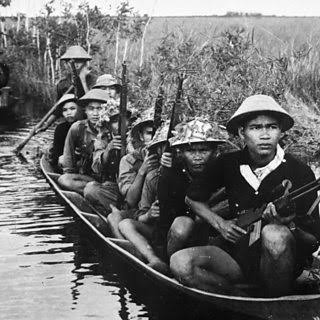
Viet Cong or NLF: National Liberation Front was the guerrilla force of South Vietnam that supported North communist Vietnam in the Tet Offensive. Any sympathizer of communist Vietnam was included in it and together was dubbed as Viet Cong.
Agent Orange: From 1961 to 1971, the US Army executed a herbicidal warfare program (along with the bombing campaigns) called the “Operation Ranch Hand” where military troops in aircraft drenched roads, rivers, canals, rice paddies, and farmland with powerful mixtures of harmful herbicides, called the agent orange that caused severe health issues. (Know more about Agent Orange here)

Tet Offensive: January 1968, a crusade of surprise attack was executed in 100 cities of South Vietnam by the NLF and PAVN army against the Army of the Republic of Vietnam (ARVN) and US troops leading to the Battle of Hue that resulted in one of the bloodiest Massacre of Vietnam, The Massacre of Hue that not only harmed the US soldiers but also the civilians. This created disbelief for the US govt among Americans and stunned by this, Republican Nixon called out for Vietnamization- a movement where the US troops were withdrawn from the site and the aerial and artillery bombardment were increased giving the South Vietnamese the training and weapons needed to effectively control the ground war.

My Lai Massacre: Then occurred the most shocking war crime of Viet Nam in march 1968, The My Lai Massacre. Unarmed men were slain, women were raped, mothers were shot, children were slaughtered and the village was burned down. This act was tried to cover up and took around 20 months to come into the light.

Leaving you to find out how the war ended and which side was primarily responsible for results, I will take the time to talk about the aftermaths,
The Post-War PTSD of the Veterans: In 1983, the National Vietnam Veterans Readjustment Study (NVVRS)1 was conducted by the U.S. government to better understand the development of PTSD from the Vietnam War, and the results were alarming. The reasons were War-Trauma, loss of near ones, friends from troops, self-medication during wartime, and misperception due to frequent failures. And most of these had long-term impacts.
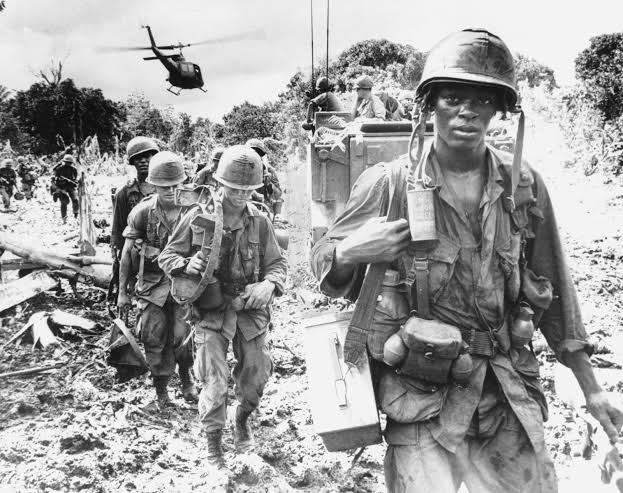
What’s Left?: After years of warfare, an estimated 2 million Vietnamese were killed, while 3 million were wounded and another 12 million became refugees. Warfare had demolished the country’s infrastructure and economy.
Part II: The Mountains sing
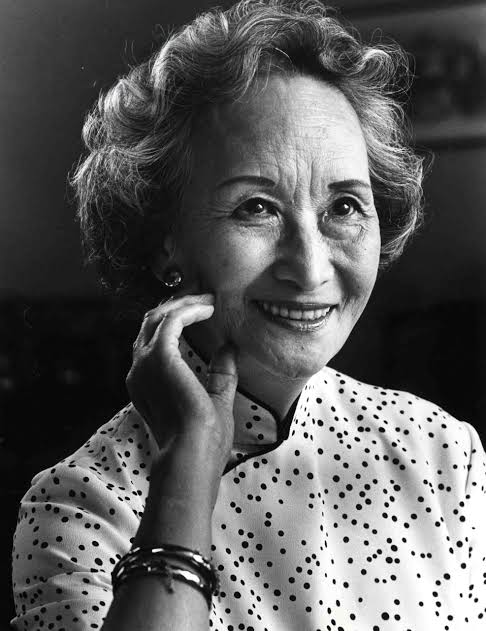
Author: Nguyễn Phan Quế Mai. Publisher: Simon and Schuster, 2020. Length: 255 pages. Original Published Language: English Genres: Historical Fiction, War story, Coming-of-age story, Domestic Fiction
Blurb: {With the epic sweep of Min Jin Lee’s Pachinko or Yaa Gyasi’s Homegoing and the lyrical beauty of Vaddey Ratner’s In the Shadow of the Banyan, The Mountains Sing tells an enveloping, multigenerational tale of the Tran family, set against the backdrop of the Viet Nam War. Tran Dieu Lan, who was born in 1920, was forced to flee her family farm with her six children during the Land Reform as the Communist government rose in the North. Years later in Hà Noi, her young granddaughter, Hương, comes of age as her parents and uncles head off down the Ho Chí Minh Trail to fight in a conflict that will tear not just her beloved country but her family apart. Vivid, gripping, and steeped in the language and traditions of Viet Nam, The Mountains Sing brings to life the human costs of this conflict from the point of view of the Vietnamese people themselves, while showing us the true power of kindness and hope. This is celebrated Vietnamese poet Nguyen Phan Que Mai’s first novel in English.}

I was excited enough to listen to all her interviews and got to know that the details were inspired by her own experiences and also those around her. (Must check the interview with 2020 quarantine book club here.)
This is for the author: Nguyễn Phan Quế Mai, please tell me why both Trấn Diệu Lan and Hủỏng sound so similar while explaining their POVs? Was it intentional? If it was, it worked for me.
If you have read everything above, you might have gone through the dark phase of the Vietnam war. Now would you believe if I tell you that Quế Mai taught us to find lights in the most impossible places? Two powerful Protagonists, two intersecting timelines, a beautiful portrayal of Viet Nam culture, introduction to age-old proverbs, food culture, love, and pride. This story has everything. Quế Mai has covered quite a span in such a small book. If you are a thicc book addict and believe that history can be told in voluminous projects only, I have something for you. Simple words, flowy lines, additional detailings, and less complicated characters weaved beautifully giving me a fable-like experience. No wonder Quế Mai is being appreciated for her debut English novel, she understands her target audience, she did it for us to realize, she introduced us to the traditions and beliefs of Vietnam.
Now to the bitter part, it shattered my heart and glue together, again and again. This is not a war book. It is a book about a country that faced atrocities, broke into pieces, and rose again like a phoenix.
This is a book of survival.
At no point, I found any biased opinions of the author. She questioned each flank impartially. (You might want to learn how to pronounce the Vietnamese names and words after this. It helps to understand the story better.)
As the grandma narrates her life, you dive into the brutally devastating history of Vietnam that suffered The Japanese Occupation, The French Colonization, The Great Hunger, and The Land Reforms. When the story jumps to the POV of the granddaughter, the brutality continues but now it’s Vietnam’s people shriveling each other in the Viet Nam War, backed up with forces that do not belong to them.
You can see the authenticity of the history at each part of the piece since the author is a native, she is familiar with the customs, culture, and food(oh, the Vietnamese food! Okay now focus).
Here’s something from the book I would like to share,
“For my grandmother, who perished in the Great Hunger; for my grandfather, who died because of the Land Reform; and for my uncle, whose youth the Vietnam War consumed.”
At this point, I want you to go back to the previous post and read about the events. And then you can understand her anguish.
Nguyễn Phan Quế Mai, you are a survivor too. You gave life to a forgotten story that the world needs to remember. You changed the general Americanized perspective of the Vietnam war. You showed them the true Viet Nam.
If this review has convinced you enough, then find your copies at the links below
1. Listen to the audiobook on Audible 2. Get your Amazon copy here. 3. Listen to it free on Spotify
If you are still not over the book, here’s something more for you.
* Some beautiful quotes from the book.
* Other amazing works by Nguyễn Phan Quế Mai
* Author Que Mai reading out a part of The Mountains Sing for you.

Book by Nguyễn Phan Quế Mai
(If you like my work, like & share this page and follow me on Instagram @ Utkirtana )




.jpg)

 Utkirtana